
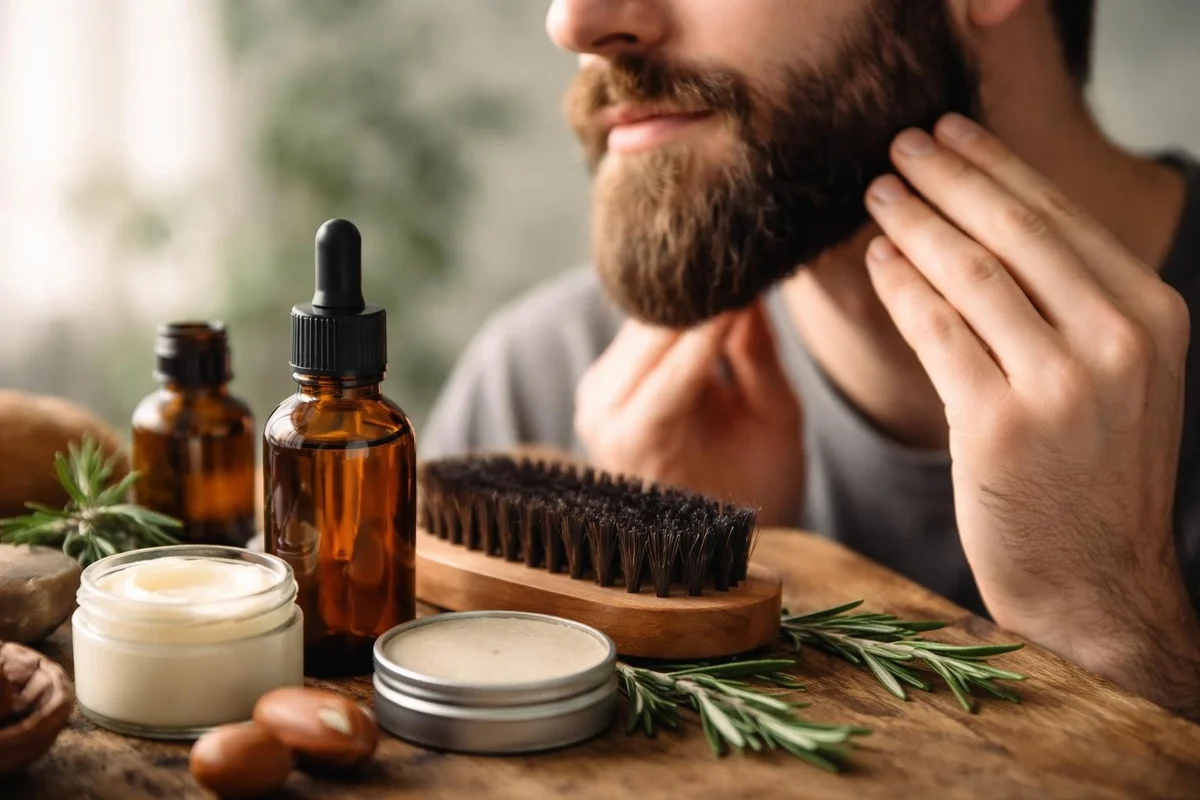

Many people approach facial hair care with the assumption that applying a product is a singular, uncomplicated task that naturally leads to a perfect result. The common belief is that one simply needs to find the best beard oil to resolve issues like itching, dryness, or an unruly appearance. While quality ingredients are a factor, the reality of maintaining healthy facial hair is more nuanced, often involving habits that influence skin health just as much as the hair itself.
The common assumptions about grooming products
It is a widespread belief that the primary purpose of applying an oil to a beard is solely to make the hair look shiny or soft. While these effects are frequently noted by users, focusing only on the visual surface of the hair overlooks the environment where that hair grows. The skin beneath a beard is often subject to different levels of hydration and irritation than the skin on the rest of the face, largely because the density of the hair can trap oils and hinder natural exfoliation.
Many users also assume that the efficacy of a product is entirely defined by its scent or its marketing claims. However, relying on these factors can lead to choosing formulas that do not actually address the specific needs of an individual’s skin or hair texture. When the underlying skin is neglected, even a high-quality product may feel ineffective because it cannot reach the area where moisture and irritation concerns originate.
What factors actually influence beard health
True beard health is typically a result of consistent, integrated care rather than a dependence on a single product. Several factors work together to create an environment where facial hair can grow comfortably.
The role of hydration and skin care
The most significant factor for many is the health of the skin underneath the beard. Facial hair can draw moisture away from the skin, leading to a sensation of tightness or itching. Products applied to the beard are meant to penetrate through to the skin, providing a barrier that helps retain natural moisture. When a person chooses a grooming product, thinking about how it interacts with the skin—rather than just the hair—often leads to a more balanced result.
Consistency in grooming habits
The timing of application matters as much as the product used. Applying a grooming oil when the skin is clean and slightly damp allows for better absorption, as the pores are more receptive and the product can more effectively lock in the moisture from a shower or wash. Grooming is often more effective when viewed as a routine that supports the body’s natural processes rather than a quick fix for a sudden problem.
How to distinguish between effective care and marketing
Navigating the market for grooming products can feel overwhelming, but there are practical ways to narrow down the choices. Rather than relying on superlatives or trending status, look for transparency in how a product is formulated.
A thoughtful approach involves considering your personal preferences:
- Ingredient focus: Some people prefer products with a focus on naturally derived oils, which are generally well-tolerated by a variety of skin types.
- Absorption levels: Not all products are formulated the same way; some are designed to be lightweight and fast-absorbing, which is often preferable for daily use.
- Sensitivity: If you have sensitive skin, testing a small amount on the inner wrist or forearm can provide more information than reading product descriptions.
When you are looking for the best beard oil, consider the consistency and whether the product leaves a greasy residue. An effective product should feel comfortable and absorbed after a short period. If a product consistently feels heavy or leaves your hair looking overly saturated for hours, it may simply be a matter of adjusting the amount used or trying a formulation that better suits your hair thickness.
Reframing the approach to facial hair maintenance
To effectively care for your facial hair, it is helpful to shift your perspective away from the “one product solves all” mindset. Instead, think of grooming as a maintenance strategy.
Maintenance is less about searching for the perfect miracle product and more about understanding what your skin and hair require on a day-to-day basis. If you notice persistent flakiness or irritation, it may be time to examine your washing habits or the frequency of your grooming routine rather than just switching to a different bottle of oil.
Questions to consider when assessing your routine include:
- Am I washing my face and beard with products that are overly harsh or stripping?
- Is my skin feeling tighter than usual in certain weather conditions?
- Does my beard feel brittle, or is it merely lacking a healthy sheen?
By observing these patterns, you can make informed decisions about when to adjust your routine. For many, finding the best beard oil is ultimately about discovering a product that fits seamlessly into a broader habit of care—one that acknowledges that healthy hair is a reflection of healthy skin.
When you move past the assumption that a product will perform all the work for you, you gain more control over the health and appearance of your beard. Grooming becomes a thoughtful practice, characterized by consistency and attention to how your skin responds to different conditions. This more reliable approach helps ensure that you are working with your body’s needs, rather than against them, making for a more comfortable and sustainable grooming experience.
