

Online slot online has become a major part of modern digital culture. With an internet connection and a compatible device, players can compete, cooperate, communicate, and explore virtual environments with people from almost anywhere in the world. What was once a relatively simple form of multiplayer entertainment has developed into a diverse industry involving competitive gaming, livestreaming, virtual communities, mobile games, and interactive experiences.
The popularity of online gaming continues to grow because games can provide entertainment while also offering social interaction and continuous challenges. Players can choose from thousands of titles, ranging from quick casual games to large virtual worlds that can take years to explore.
Understanding Online Gaming
Online gaming refers to playing a video game while connected to the internet. The internet connection allows a game to communicate with servers and other players.
Depending on the title, online gameplay may involve competing against other players, cooperating with teammates, completing shared missions, trading items, or communicating through voice and text.
Some games are completely online, while others offer both offline and online modes.
How the Industry Developed
The earliest online multiplayer experiences were relatively limited because internet connections were slow and unreliable. Games could not support the large numbers of players or sophisticated graphics seen today.
The expansion of broadband internet changed the situation. Faster connections made real-time multiplayer games much more practical.
Gaming consoles eventually introduced dedicated online services, while personal computers benefited from digital game stores and online communities. Smartphones later brought another major change by making multiplayer gaming available to an enormous mobile audience.
As a result, online gaming is now accessible across many different types of devices.
Different Online Gaming Experiences
One of the strengths of online gaming is its variety.
Competitive Games
Competitive games allow players to test their skills against other people.
Matches may involve individual players or teams. Rankings and leaderboards can provide additional goals for players who enjoy competition.
Cooperative Games
Cooperative games are designed around teamwork. Players may have to complete missions, defeat powerful enemies, solve puzzles, or survive challenging environments together.
Communication is often important because different players may have different abilities or responsibilities.
Open-World Games
Some online games provide large environments that players can explore freely.
These games may contain missions, activities, social spaces, vehicles, businesses, character customization, and other interactive features.
Role-Playing Games
Online role-playing games allow players to create and develop characters.
Players can gain experience, acquire equipment, complete quests, and participate in activities with other members of the game community.
Casual Online Games
Not every player wants a highly competitive experience. Casual online games are often designed to be easy to understand and can be played during short sessions.
These games are particularly common on smartphones and tablets.
The Social Nature of Gaming
Online gaming has become a social activity for many people.
Friends can create groups and play together even when they are separated by large distances. Voice chat allows teammates to communicate during matches, while community platforms provide spaces for discussions outside the game.
Gaming communities can develop around particular titles, teams, creators, or genres.
However, players should remember that online communities include strangers. Personal information such as addresses, passwords, financial details, and private documents should never be shared with unknown users.
Improving Gaming Skills
Online games can provide continuous opportunities for improvement.
A player may initially struggle with a particular game but become better through practice and experience.
Improvement can involve learning game mechanics, studying maps, understanding character abilities, improving reaction time, or developing better strategies.
Competitive players often review their own gameplay to identify mistakes and find ways to improve.
Online Gaming and Communication
Communication is particularly important in team-based games.
Players may need to communicate information quickly, coordinate attacks, warn teammates about opponents, or organize defensive strategies.
Effective communication can make teamwork more organized.
At the same time, poor communication can create frustration. Players can help maintain healthier gaming environments by avoiding insults and using reporting or blocking tools when necessary.
Gaming and Streaming Platforms
The growth of livestreaming has significantly expanded the gaming industry.
Players can broadcast their gameplay to viewers around the world. Some creators focus on competitive gameplay, while others produce humorous content, tutorials, reviews, or gaming discussions.
Viewers can interact with creators through live chats and community features.
Gaming videos have also become popular, including walkthroughs, guides, reviews, highlights, and educational content.
The Rise of Esports
Esports is another major development connected to online gaming.
Professional players compete in organized tournaments with established rules and teams. Some competitions attract significant audiences online and at physical venues.
The esports ecosystem includes players, coaches, analysts, commentators, tournament organizers, sponsors, broadcasters, and content creators.
For talented and dedicated players, competitive gaming can become part of a professional career, although the professional path is highly competitive.
Mobile Online Gaming
Mobile gaming has helped online games reach a broader audience.
Almost everyone carries a smartphone, making it easier to access games without purchasing a dedicated gaming device.
Mobile games range from simple puzzle titles to technically advanced multiplayer experiences.
Improvements in mobile processors, graphics, displays, and wireless networks have allowed developers to create increasingly sophisticated games for phones and tablets.
Online Gaming and Technology
Technology plays a central role in modern gaming.
Graphics processors allow developers to create detailed environments and realistic visual effects. Fast processors can handle complex game systems and large virtual environments.
Modern networking technology helps reduce latency and supports real-time multiplayer interactions.
Cloud computing is also becoming increasingly important. Cloud gaming allows game processing to take place on remote servers, with the gameplay streamed to the player’s device.
Potential Problems
Online gaming can be enjoyable, but excessive use can create problems.
Spending too much time playing may reduce sleep, physical activity, productivity, or social interaction outside gaming.
Players can reduce these risks by establishing reasonable gaming schedules and taking regular breaks.
Another issue is online spending. Many games include optional purchases, virtual currencies, and subscription systems. Understanding these costs and setting personal spending limits can help prevent unwanted expenses.
Staying Safe Online
Security should be an important part of online gaming.
Players should create strong passwords and avoid using the same password across multiple services.
Two-factor authentication can provide additional protection where supported.
Players should also be cautious of messages offering free items, currency, accounts, or prizes. Scammers sometimes use these offers to obtain login credentials or financial information.
Downloading unofficial game files can also create security risks, so players should use trusted sources whenever possible.
The Future of Online Gaming
The future of online gaming will likely be shaped by several emerging technologies.
Artificial intelligence could help create more responsive characters and personalized game experiences.
Virtual reality could provide more immersive multiplayer environments, while augmented reality could combine digital games with physical locations.
Cloud gaming may reduce the hardware requirements for accessing high-quality titles.
Cross-platform gaming is also likely to remain important as players increasingly expect to interact with friends regardless of the device they use.
Responsible Gaming
A balanced approach allows players to enjoy DEWA222 without allowing it to interfere with other areas of life.
Players should make time for sleep, exercise, education, work, family, and offline social activities.
Taking breaks during long sessions can also help reduce physical discomfort and fatigue.
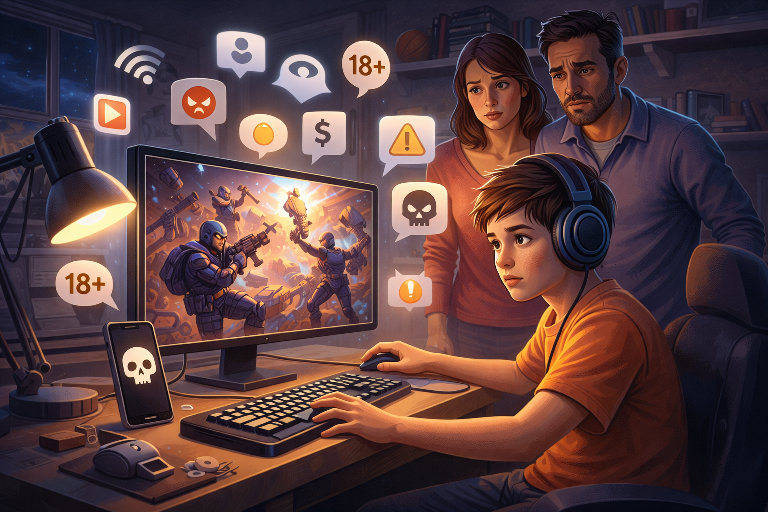
For younger players, parents can use available parental controls to manage playtime, communication, purchases, and access to age-inappropriate content.
Conclusion
Online gaming has developed into a diverse and influential part of modern entertainment. It provides opportunities for competition, cooperation, creativity, social interaction, and exploration.
From mobile games and casual multiplayer experiences to professional esports and massive virtual worlds, there is now an enormous range of online entertainment available to players.
As technology continues to advance, online games are likely to become more connected, interactive, and immersive. By practicing good cybersecurity, managing spending, taking regular breaks, and maintaining a balanced lifestyle, players can enjoy online gaming as a positive form of digital entertainment.
